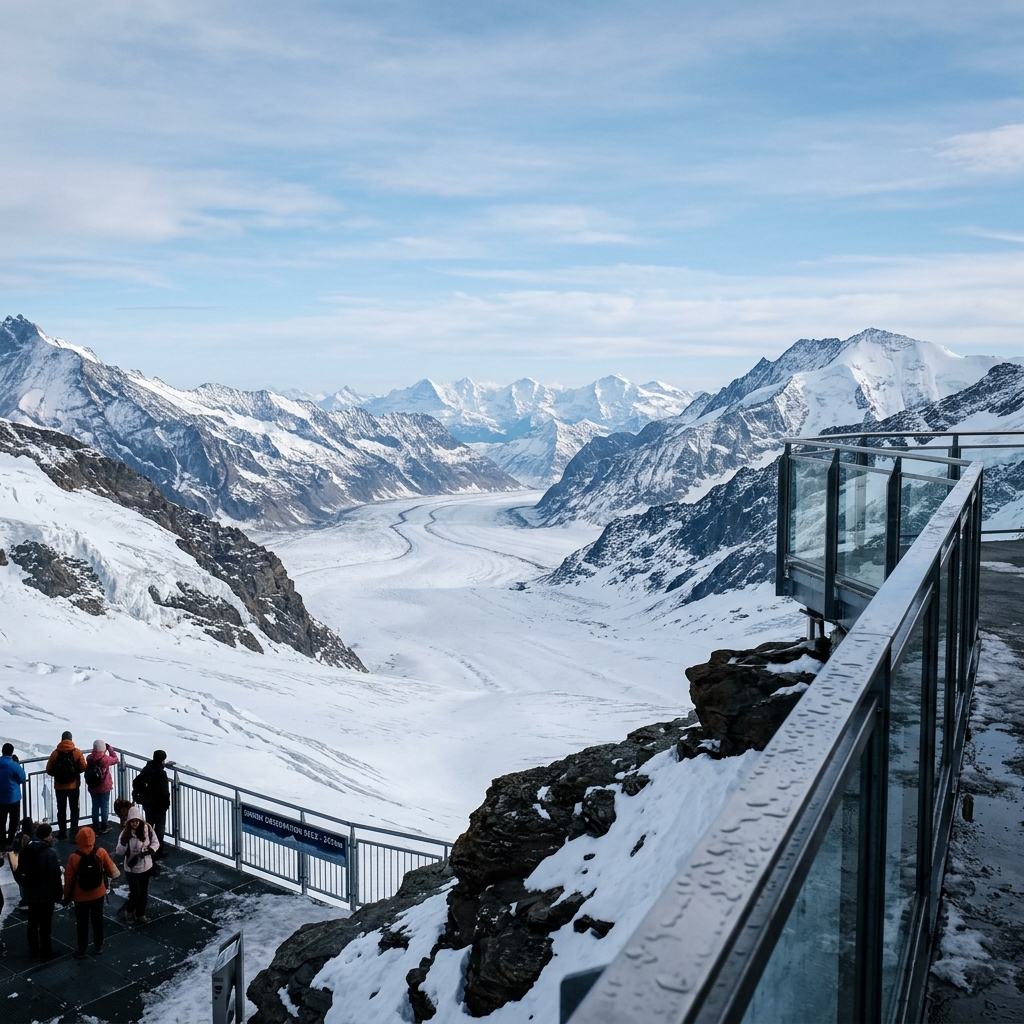
What is Jungfraujoch?
Jungfraujoch is a saddle between the Jungfrau (4,158m) and Mönch (4,107m) peaks in the Bernese Alps of Switzerland. At 3,454m, it is home to the Sphinx Observatory and the highest railway station in Europe — the Jungfraubahn station, reached by the Jungfrau Railway, which has been running since 1912.
The name "Top of Europe" is a marketing phrase but not an overstatement of the experience. Standing at the Sphinx observation deck on a clear day, you look across the Great Aletsch Glacier — the largest glacier in the Alps at 23km long — with France, Germany and Italy visible in the distance. It is genuinely one of the most spectacular views on the continent.
Our honest take
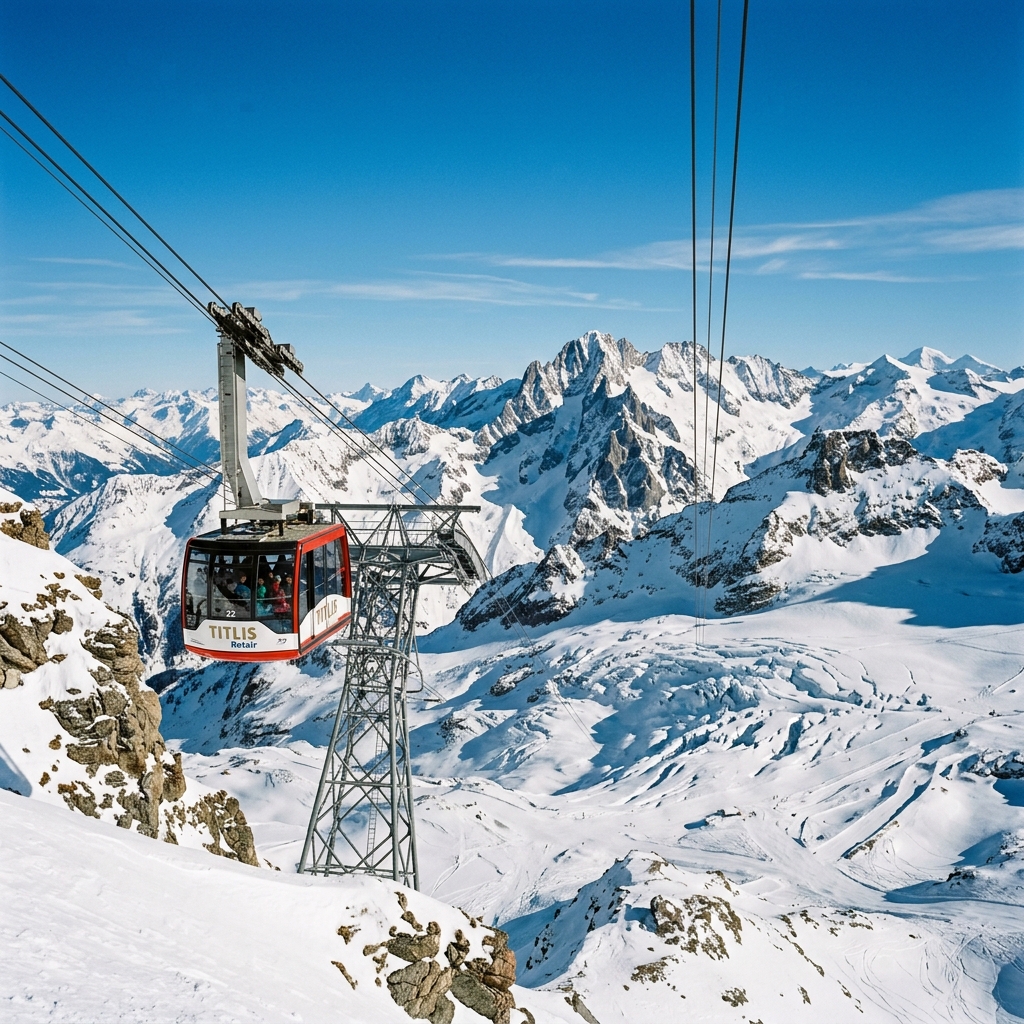
Jungfraujoch lives up to the hype — but only on a clear day. Check the forecast the night before. If it is cloudy, consider rescheduling or switching to Mount Titlis, which has more consistently visible glacier activities even in partial cloud. Jungfraujoch on a clear day is one of the best experiences in all of travel. On a foggy day, it is a very expensive train ride.
What to expect at the top
The Jungfraujoch complex includes several interconnected areas inside and on top of the mountain. Plan for 2–3 hours at the top to explore everything properly:
- Sphinx Observation Deck — the outdoor platform at 3,571m. The panoramic view of the Aletsch Glacier is the main reason people come here.
- Ice Palace — an underground ice cave carved into the glacier, with sculptures and tunnels. Temperature inside: around -3°C year-round.
- Plateau (snow field) — you can walk directly onto the glacier surface. Snow activities like sledging and zip lines available in season.
- Sphinx Restaurant — sit-down dining at altitude with panoramic views. Worth a hot coffee or fondue.
- Alpine Sensation — a free-entry audiovisual experience documenting the history of the Jungfrau Railway.
Jungfraujoch vs Mount Titlis — which should you choose?
This is the most common question on this site, and the honest answer depends on what you are actually looking for:
| Jungfraujoch | Mount Titlis | |
|---|---|---|
| Summit altitude | 3,454m | 3,020m |
| "Famous name" factor | ⭐⭐⭐⭐⭐ | ⭐⭐⭐ |
| Snow/glacier year-round | ✅ Yes | ✅ Yes |
| Transfer from Zurich | ~3h | ~2h |
| Family-friendly | ⚠️ Altitude can affect kids | ✅ Excellent for families |
| Clear-day dependency | High — plan around forecast | Medium — glacier visible in cloud |
Choose Jungfraujoch if: this is your once-in-a-lifetime Switzerland day and you want the iconic "Top of Europe" feeling. Book when the forecast shows clear skies.
Choose Titlis if: glacier activities and snow are the priority, or if you are travelling with young children, or you are on a tighter schedule (shorter transfers).
Practical information
- Departure points: Most guided tours depart from Zurich, Interlaken or Grindelwald. Independent travelers take trains from Interlaken Ost.
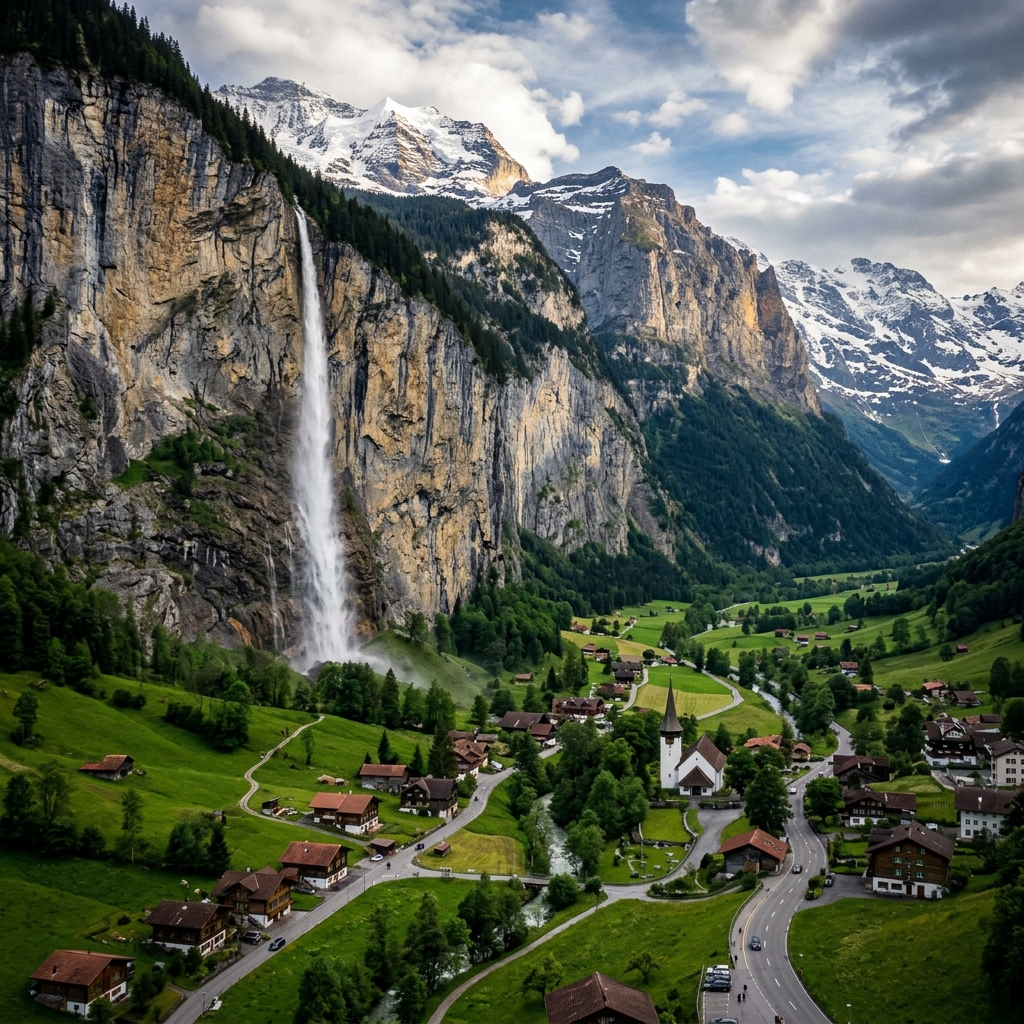
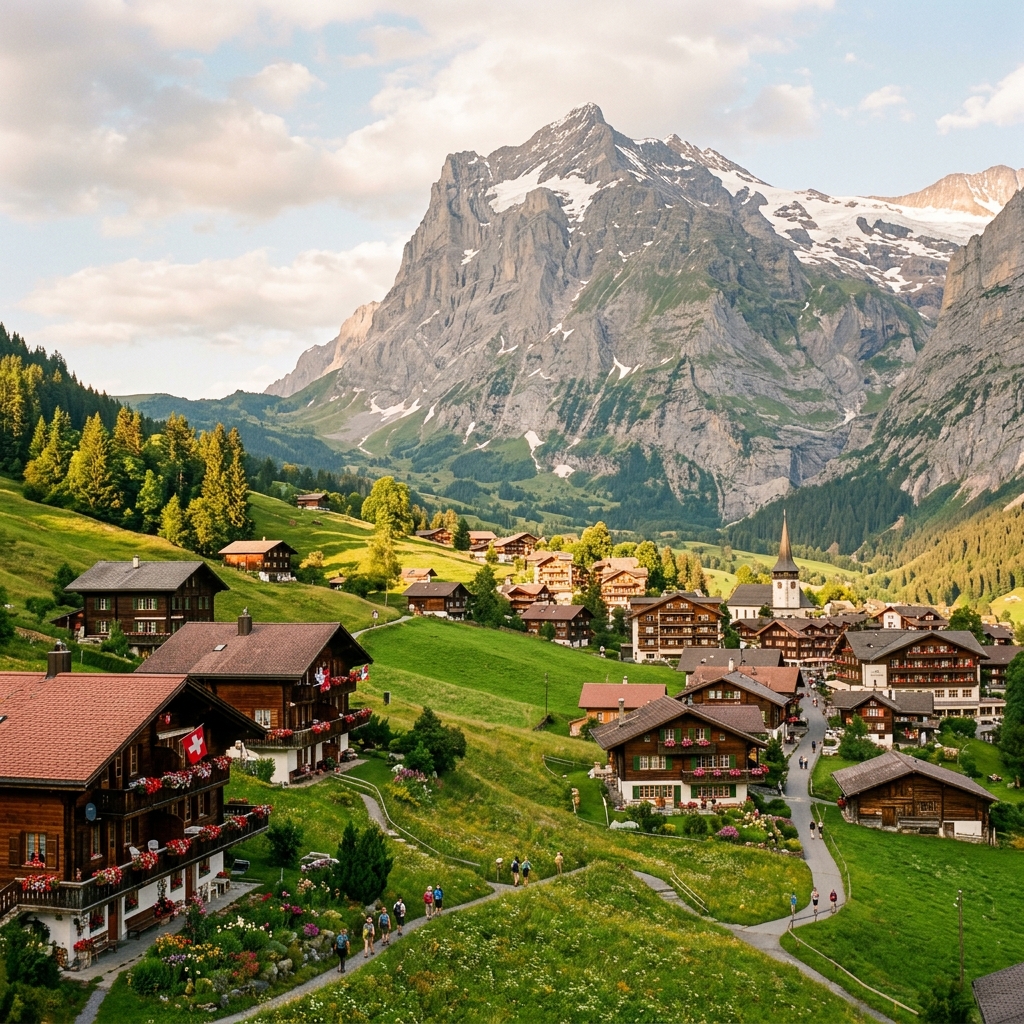
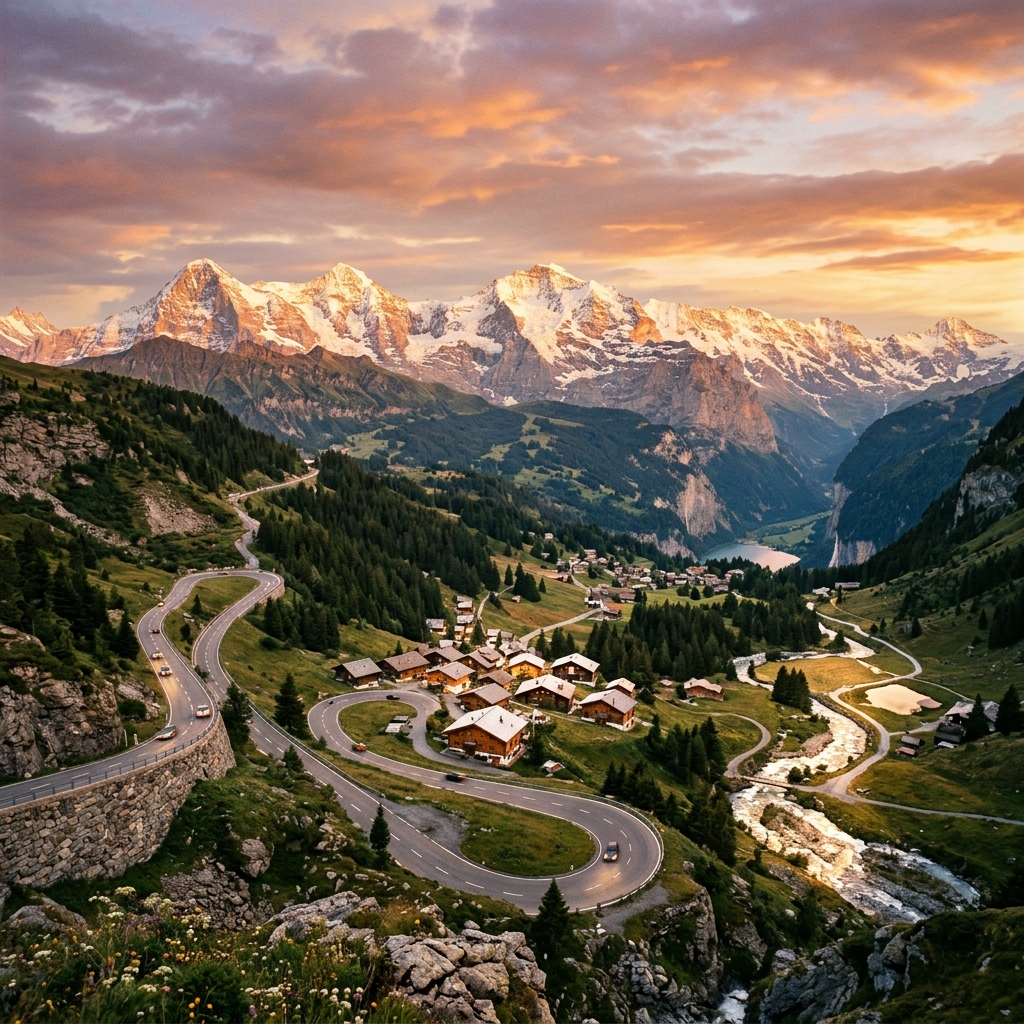
- Rail route: Interlaken Ost → Grindelwald or Lauterbrunnen → Kleine Scheidegg → Jungfraujoch. The final section (Kleine Scheidegg to Jungfraujoch) goes entirely through a tunnel inside the mountain.
- Time at the top: Allow 2–3 hours minimum.
- What to wear: Warm waterproof jacket essential — temperature at top is 0°C to -15°C year-round. Sunglasses and sunscreen mandatory (UV radiation at altitude is severe).
- Altitude effects: Some people experience mild headaches, nausea or dizziness at 3,454m. Children under 5 and people with heart or respiratory conditions should consult a doctor before going.
- When to book: Minimum 2 weeks in advance in peak summer (July–August). Sells out regularly.
Best season for Jungfraujoch
Jungfraujoch is open year-round. Each season offers a distinct experience:
- Summer (June–September): Busiest season. Longest daylight hours. Glacier is most accessible for walking. Book far in advance.
- Autumn (October–November): Fewer crowds. Dramatic cloud effects below the summit. Slightly lower visitor numbers.
- Winter (December–March): Snow-covered villages en route add to the atmosphere. The summit itself looks extraordinary in winter.
- Spring (April–May): Good balance of crowds and conditions. Alpine flowers in the valleys below.
Check the forecast the night before
The Jungfraujoch viewing experience is entirely weather-dependent. The Jungfrau Railway website has a live webcam showing current summit conditions. Always check this before committing to the day. If it is cloudy at the summit, reschedule if possible.
Tips from experience
- Leave Zurich or Interlaken as early as possible — 7–8am. The summit is most crowd-free before 11am.
- Eat a full breakfast before going up. Food at altitude is available but expensive.
- Bring layers, not just a jacket. The cold intensifies quickly on the outdoor platform.
- Use the train journey to photograph the mountain views — the windows are large and the scenery is spectacular en route.
- In summer, try to avoid weekends — weekday visits are noticeably less crowded.
- The ICE Palace is cold even by summit standards — keep your coat on inside.
- Guided day tours often include all rail tickets, insurance, local guide and priority access. They reduce stress significantly on the first visit.